


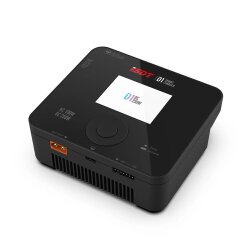
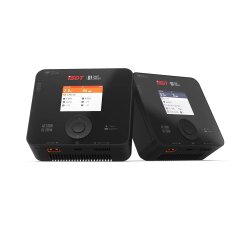
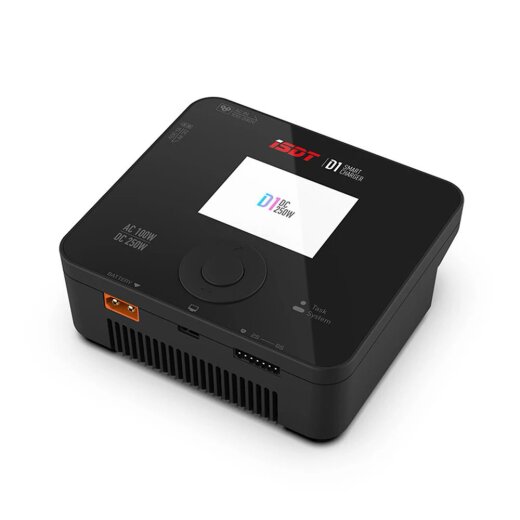
iSDT D1 Dual Mode Smart Charger AC 100W DC 250W 1-35V
- Número de artículo: MBS-ISDT-11
- EAN / GTIN: 0096718607693
- #global.han#: D1
- Categoría: Ladetechnik
-
Fabricante:

iSDT D1 Dual Mode Smart Charger AC 100W DC 250W 1-35V
- Output voltage: DC 1~35V
- Max. input current: DC 14A
- Charging current: 0.1~10A
-
Supported battery types and cell count:
- LiFe
- Lilon
- LiPo 1~6S
- LiHv 1-6S
- Pb 1-12S
- NiMH, Cd 1- 16S
Descripción
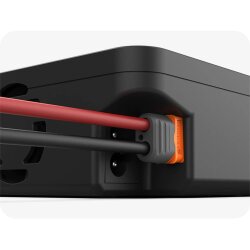
Der iSDT D1 Dual Mode Smart Charger besitzt einen AC/DC-Dualmodus, sowie einen sicheren Zugang. Diese Ladeoption unterstützt USB-Interferenzen, damit die Firmware immer auf dem neusten Stand bleiben kann und die maximale Leistung erzielt werden kann.
Technische Daten
- Input voltage: AC 100~240V / DC 10~30V
- Output voltage: DC 1~35V
- Max. input current: DC 14A
- Charging current: 0.1~10A
- Discharging current: 0.1~1.0A
- Balance current:1.5A/Cell Max
- Max. discharging power: 15W
- Max. charging power: AC 100W / DC 250W
- Supported battery types and cell count: LiFe, Lilon, LiPo 1~6S, LiHv 1-6S, Pb 1-12S, NiMH, Cd 1- 16S
- Working temperature0~40?
- Storage temperature: -20?~60?
Lieferumfang
- 1 x iSDT D1
Valoraciones
Todavía no hay opiniones.


