


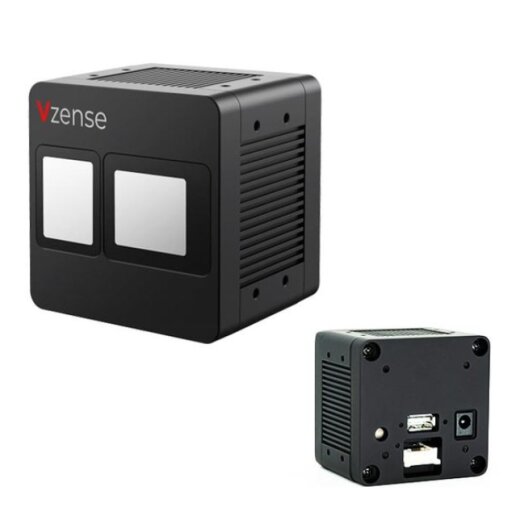
Vzense DCAM550
- SKU: MBS-SES-189
- Category: LiDAR
- Manufacturers:
Vzense DCAM550
- reliable and accurate 3D depth data
- field of view: 69°, 51
- VGA resolution: 640x480 pixels
- waterproof according to IP67
- logistics, automation, mobile robots, behavior detection
Description
The DCAM550 series is the lightest, smallest and most affordable industrial Time-of-Flight (ToF) 3D camera in its category.
The Vzense DCAM550 can interpret reliable and accurate 3D depth data. This makes it easy to adapt to diverse tasks. The application areas are versatile. From logistics, industrial automation, mobile robots to human behavior detection. The wide field of view (69°, 51°) and a VGA resolution of 640 x 480 pixels are the reasons for the wide range of applications. It is also waterproof according to IP67.
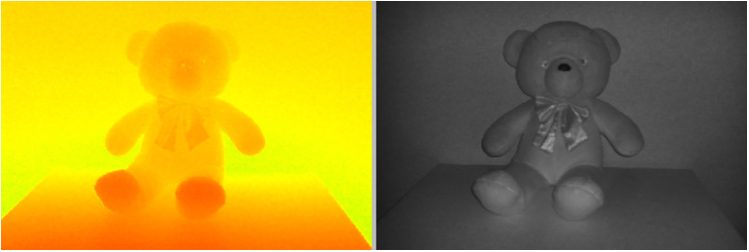
The Vzense ToF products can output 12-bit depth images and black and white images at the same time. These two images are fully aligned in space and time. In addition, the DCAM550 series is capable of operating in passive trigger mode, which means that it is always in slave standby mode. Accordingly, it waits for the reception of a trigger signal to start acquiring the data image. It then switches back to slave standby mode.
The series includes DCAM550-U, DCAM550-P and DCAM550-E.
Reviews
There are no reviews yet.

