PM02D Power Module | High Voltage (2S-12S)
- SKU: MBS-HOLY-01
- GTIN: 0658917510886
- HAN: 15011
- Category: Accessories
-
Manufacturers:

PM02D Power Module | High Voltage (2S-12S)
- Regulated 5.2V output at 3A maximum from LiPo batteries up to 12S (HV)
- Includes XT60 connectors and shrink tubing for protection
- Provides current and voltage measurements through a 6-pin cable
Description
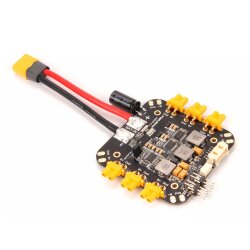
The PM02D Power Module provides regulated power supply for your Pixhawk® 5X & 6X from the battery, as well as current consumption and battery voltage measurements through a 6-pin cable. The onboard switching regulator outputs 5.2V and a maximum of 3A from LiPo batteries up to 12S (HV). The power module comes fully assembled with XT60 connectors and wrapped in shrink tubing for physical damage protection.
It is not designed to power servos; please use your aircraft's ESC/BEC for that. The Molex 2.00mm pitch CLIK-Mate Wire-to-Board connector is rated for 3.0A current per contact.
Specifications
- Input Voltage: LV: 2S-6S (Discontinued) | HV: 2S-12S
- PCB Continuous Current Rating: 60A | PCB Burst Current Rating: 100A (<60 Sec)
- Max Current Sensing: HV: 327A
- Voltage and Current Monitoring with I2C Compatible Interface | Outputs 5.2V and 3A max
What's Included
- 1 x PM02D Power Module
- 1 x 6-pin 2.00mm Pitch Cable
Reviews
There are no reviews yet.